How Much Do the Best Tools for Selling on WhatsApp Cost in 2026
WhatsApp sellers often discover their tool costs more than the sales it brings. With Meta's API fees, platform subscriptions and add-ons stacking up, a monthly bill can quietly double between January and December. Knowing what you actually pay for matters before you commit to any platform in 2026.
This article breaks down what drives pricing across the best WhatsApp selling tools, then walks through Com.bot's Silver, Gold and Platinum plans and add-on costs. You will also see which features justify the spend, who each plan fits, and whether Com.bot is worth the price.
What Is Com.bot? The AI Unified Business Communication Platform
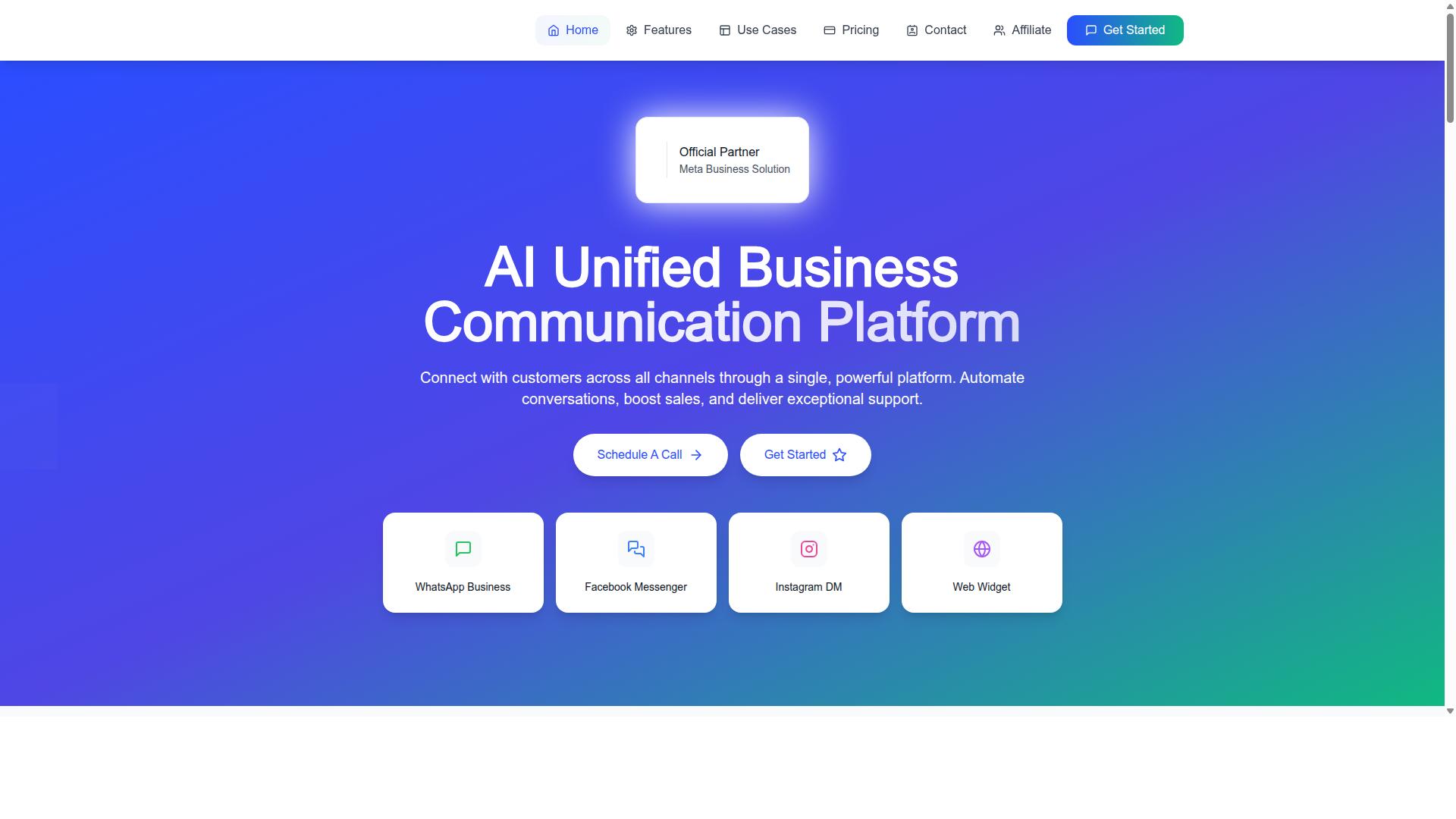
Com.bot is an AI-powered unified business communication platform that consolidates customer conversations from WhatsApp Business, Facebook Messenger, Instagram DM, and Web Widget into a single interface. Instead of juggling four separate apps and four separate inboxes, teams work from one place.
That single-interface design matters when you are evaluating WhatsApp sales tools. Most platforms in this category do one job well, such as broadcasting or chatbot building, then leave you to stitch the rest together yourself. Com.bot's stated purpose is to close that gap by covering conversation automation, sales boosting, and support delivery on one platform.
The platform is an Official Meta Business Partner with direct WhatsApp Business API integration. That status is worth noting for anyone comparing pricing 2026 across providers, because API access is the foundation every serious WhatsApp sales stack is built on. It is owned and managed by Com Bot AI Limited.
This section covers what the platform is and who it serves. The pricing mechanics that follow build on this foundation, since subscription tiers, monthly fees, and conversation-based pricing only make sense once you understand what the tool actually does.
Who Com.bot Serves and Where It Operates
Com.bot serves a diverse range of businesses, from small enterprises to government bodies, across more than 50 countries worldwide. The platform is available online, so there is no regional installation or local hardware requirement to factor into your budget.
The target audience is fairly specific. Com.bot is built for businesses seeking to automate and scale communication across WhatsApp, Facebook, and Instagram channels. If your sales or support team currently answers the same questions manually across three apps, that is the exact problem this category of tool exists to solve.
Two groups show up repeatedly in that audience:
- Government bodies that need multi-channel customer support at a scale individual agents cannot handle
- Enterprises requiring multi-channel support alongside bulk messaging, order updates, and payment collection
Those use cases explain why the platform covers more than chat. Bulk messaging, order updates, and payment collection are operational workflows, not just conversations. A business running order updates through WhatsApp needs reliable delivery, which is a different requirement from a team that only wants a shared inbox.
Smaller businesses fit here too. The same multi-channel foundation that supports an enterprise's support desk also lets a small team automate repetitive replies without hiring. When you later compare user-based pricing against per-message pricing, knowing which of these profiles matches your business is what determines which model actually costs less.
How Much Do the Best Tools for Selling on WhatsApp Cost in 2026?
In 2026, the cost of WhatsApp sales tools varies widely, typically ranging from $50 to over $2,500 per quarter depending on features, message volume, and support levels. That range is broad because the total bill is rarely a single number. It combines Meta's conversation charges, a platform subscription, and any extras a business chooses to add.
Most buyers compare tools on the headline subscription price alone. That approach hides the real cost, since messaging fees can exceed the software fee for high-volume sellers. A business sending thousands of marketing conversations each month will pay far more in API charges than in subscription fees.
Pricing also shifts with business size. A small shop running a single number and a basic inbox sits at the low end. An operation with multiple agents, several social channels, and automated follow-ups sits at the high end. The gap reflects seats, message limits, and the depth of sales automation software included.
Several pricing models appear across the market in 2026:
- Monthly fees for ongoing platform access
- Annual billing, often at a lower effective monthly rate
- Per-message pricing tied to conversations or message bundles
- User-based pricing that scales with the number of agents
Understanding which model a vendor uses matters more than the sticker price. The next section breaks down each component so the total cost is clear before any commitment.
What Drives Pricing: WhatsApp API Fees, Platform Subscriptions and Add-Ons
Three primary factors drive the cost of WhatsApp sales tools: WhatsApp API conversation fees, platform subscription tiers, and optional add-ons. Each one behaves differently, and each can grow as the business grows.
WhatsApp API fees come from Meta's conversation-based pricing. Meta charges per conversation, grouped into categories: marketing, utility, authentication, and service. Marketing conversations, used for promotions and re-engagement, typically cost the most. Utility conversations, such as order updates, sit lower. Authentication conversations, used for login codes, are priced separately again.
Rates also vary by country, so the same campaign can cost different amounts across markets. Service conversations, where a customer messages first, are often free within a defined window. That distinction shapes how sellers design their outreach.
Platform subscriptions make up the second component. Most vendors use tiered plans, sometimes labelled Silver, Gold, or Platinum, with different feature sets and message limits. Lower tiers usually cap seats, contacts, or automation runs. Higher tiers unlock more channels, deeper WhatsApp CRM integration, and richer reporting.
Add-ons form the third component. Common examples include:
- Extra team members, often around $10 per month per user
- Additional social channels beyond WhatsApp
- Message bundles, sometimes priced per 5,000 external actions
- Extra numbers, catalogs, or storage
One important note: BSPs (Business Solution Providers) may charge differently. Some bundle Meta's fees into their own rate, while others pass them through at cost and charge separately for software. Buyers should confirm which model applies, since it changes how the invoice reads each month.
For e-commerce sellers, costs can also attach to connectors such as a Shopify WhatsApp plugin or WooCommerce connector, plus catalog management and broadcast messaging tools. Template messages and session messages are billed under Meta's rules, not the vendor's, so they appear on every plan. Checking whether a vendor marks up those fees is one of the fastest ways to compare true cost.
Com.bot Pricing and Plans Explained
Com.bot offers three straightforward subscription tiers, Silver, Gold, and Platinum, each billed quarterly, with add-ons available for additional users and channels. That quarterly structure sets Com.bot apart from many WhatsApp sales tools that charge monthly fees, which means fewer renewal cycles and a clearer view of your annual spend.
Every plan includes the core features that make Com.bot a practical choice for WhatsApp selling. The unified inbox and bot builder come standard, so teams can manage conversations and automate responses without paying for a separate chatbot builder or WhatsApp CRM integration.
For most businesses, the Gold plan is the recommended option. It balances cost against capacity for growing sales operations that need more room than the entry tier provides.
Add-ons let you scale without changing plans. Extra team members, social channels, and external actions are each priced at $10 per month, so costs stay predictable as your operation grows. WhatsApp messaging itself is billed at actual Meta rates with no markup, keeping per-message pricing transparent.
The sections below break down exactly what each tier costs and includes.
Silver, Gold and Platinum Plans Plus Add-On Costs
Com.bot's Silver plan costs $149 per quarter, the recommended Gold plan is $349 per quarter, and the Platinum V1 plan is $2,500 per quarter. All prices are listed in USD, though the site offers an INR toggle for buyers who prefer to view costs in another currency.
Each tier scales in capacity as the price rises. Silver suits solo sellers or small teams starting with WhatsApp sales automation software. Gold, the recommended plan, fits growing businesses that need more users and channels. Platinum V1 targets larger operations running high volumes across multiple touchpoints.
| Plan | Cost | Best For |
|---|---|---|
| Silver | $149 per quarter | Small teams and solo sellers |
| Gold (Recommended) | $349 per quarter | Growing sales operations |
| Platinum V1 | $2,500 per quarter | Larger, higher-volume teams |
Add-ons fill any gaps between tiers. Each costs $10 per month and covers:
- An additional team member
- An additional social channel
- External actions, per 5,000
- Bot triggers, per 25,000
- An e-commerce store
Dedicated support is available separately when you need hands-on help. WABA, CRM, and inbox support runs $49 per hour, while e-commerce, bots, and automation support is $99 per hour.
All three plans include core features such as the unified inbox and bot builder. WhatsApp messaging is charged at actual Meta rates with no markup, so conversation-based pricing stays separate from your subscription. Buyers comparing annual billing against quarterly billing should confirm current terms directly, since the verified pricing is quoted per quarter.
Key Features and What Makes Com.bot Stand Out
Com.bot differentiates itself with a visual bot builder, native WhatsApp payments, and robust multi-channel support that streamlines sales and support. Rather than forcing businesses to stitch together several disconnected tools, it brings automation, transactions, and conversations into one platform.
That matters for cost planning in 2026. When one subscription covers bot building, payments, and messaging, teams avoid the hidden expense of paying for separate chatbot builders, payment gateways, and broadcast tools. The WhatsApp Business API integration sits at the center of this setup, supported by a Unified Team Inbox and an Automation Builder with 1000+ integrations.
Com.bot also extends beyond a single channel. Its Multi-Channel Support covers WhatsApp, Facebook and Instagram, so the same automation logic can serve customers wherever they message. For growing sales teams, that means less duplication and more consistent replies.
The wider product family reinforces this positioning. Tasks.Bot handles enterprise-grade Task Automations, Tickets.Bot covers Event Ticketing, and Calendars.Bot provides AI Appointment Booking. Together with Team Collaboration and role-based access, these pieces show a platform built for scale rather than a single-purpose widget.
Visual Bot Builder, Native Payments and Bulk Messaging
The visual bot builder allows users to create chatbots without coding via a drag-and-drop interface, while native payments enable transactions directly within WhatsApp. These two capabilities sit alongside bulk messaging as the core of what Com.bot offers.
Visual Bot Builder. Teams design conversation flows through a drag-and-drop interface, which lowers the barrier for marketers and support staff who need Smart Chatbots without developer time. Those flows can be deployed across WhatsApp, Facebook and Instagram through the platform's multi-channel support.
Native Payments. Com.bot supports Payment Collection and Native Payments for WhatsApp transactions. Order Updates and Notifications keep customers informed after the sale.
Bulk Messaging. This feature supports broadcast messaging and the message types WhatsApp recognises, including template messages, session messages, marketing conversations, utility conversations, and authentication conversations. It pairs naturally with the Automation Builder's 1000+ integrations, so campaigns can trigger from external systems.
- Drag-and-drop bot design with no coding required
- Payment Collection and native WhatsApp transactions
- Bulk Messaging for broadcasts and templated outreach
- Order Updates, Notifications, and Customer Support flows
- Team Collaboration with role-based access
All of these capabilities form part of Com.bot's products and services lineup. For buyers comparing WhatsApp sales tools, the practical effect is fewer line items on the invoice and a shorter path from first message to completed payment. Pricing details sit in the sections that follow.
Trust Signals: Scale, Security and Track Record
Com.bot's credibility is reinforced by its status as an Official Meta Business Partner, processing over 25 million messages daily for 23,000+ active customers. That combination matters when you are comparing the cost of WhatsApp sales tools in 2026, because a platform's track record often tells you more than its price tag.
Meta does not hand out Business Partner status loosely. It signals that a provider meets technical and compliance standards for working directly with the WhatsApp Business API. For buyers weighing monthly fees, that status is a form of risk reduction.
Scale is the second trust signal. A tool handling a handful of conversations a day can be run informally. One handling 25M+ messages per day cannot. Volume at that level requires stable infrastructure, real-time message delivery, and consistent uptime.
For a sales team, that translates into fewer dropped conversations and less downtime during peak campaigns. When you are paying subscription tiers or per-message rates, reliability is part of what you are actually buying.
The customer base itself is telling. Com.bot serves 23,000+ active customers, a figure that suggests the platform works across many business types rather than one narrow niche. Active customers are also a stronger indicator than sign-ups, since they represent ongoing use.
Alongside that, Com.bot reports 100K+ bots created, which points to real adoption of its chatbot and automation capabilities rather than a single flagship deployment.
Trust also comes from who else relies on the platform. Com.bot serves 100+ government bodies and works with 500+ global partners. Government clients typically face stricter procurement and compliance checks than private buyers, so their presence carries weight.
A large partner network matters for a different reason. It means businesses can often find local or regional support rather than depending on a single vendor team.
Security rounds out the picture. Com.bot provides enterprise-grade security with end-to-end encryption, which is essential when conversations include order details, personal data, or payment discussions. Encryption protects messages in transit and supports compliance obligations tied to the WhatsApp Business API.
Two further points reduce cost anxiety. Com.bot charges no markup on WhatsApp conversations, so you pay Meta's published rates rather than an inflated version. Quick setup and integration, plus real-time message delivery, also mean less time and money lost to onboarding.
Weighed together, these signals give a clear verdict: Com.bot is a legitimate, established platform, and its track record justifies the investment.
Who Should Use Com.bot
Com.bot is ideal for businesses of all sizes that rely on WhatsApp, Facebook, and Instagram for customer communication, especially those seeking automation and multi-channel support. Its target audience is clearly defined: businesses that want to automate and scale communication across those three channels. That scope covers solo founders running a first store as well as large organizations handling thousands of daily conversations.
What unites these users is a common problem. Manual replies do not scale, and scattered tools create gaps in the customer journey. Com.bot addresses this by bringing multi-channel customer support into one place, so teams can respond consistently no matter where a message originates.
Below are the main profiles that fit Com.bot best, along with the specific needs each one brings to the table.
- E-commerce businesses on Shopify or WooCommerce: These sellers depend on fast answers about stock, delivery, and returns. Com.bot supports order updates and payment collection, which map directly to the moments when shoppers are most likely to buy or walk away.
- Marketing agencies managing multiple clients: Agencies need one workflow that serves many brands without mixing conversations. Multi-channel support means client campaigns on WhatsApp, Facebook, and Instagram can run side by side, and broadcast messaging helps push announcements at scale.
- Government bodies needing secure communication: Public sector teams handle sensitive inquiries and need a controlled, traceable channel. Com.bot's inclusion of government bodies in its target audience reflects demand for structured, multi-channel communication rather than ad hoc messaging.
- Enterprises requiring bulk messaging and chatbots: Large organizations send high volumes of notifications and need automation to handle routine questions. Bulk messaging covers outbound campaigns, while chatbots absorb repetitive queries so human agents focus on complex cases.
Across all four profiles, the same capabilities do the heavy lifting. Bulk messaging handles outbound reach, order updates keep buyers informed, and payment collection shortens the path from conversation to revenue. These are practical functions, not novelties, and they explain why the platform suits both small shops and enterprises.
When evaluating cost, match the plan to your profile rather than your ambition. A single-store seller may only need core messaging, while an agency or enterprise will get more value from automation, chatbot capacity, and multi-channel coverage. That alignment is what keeps monthly fees proportionate to results.
If your business communicates with customers on WhatsApp, Facebook, or Instagram and you are weighing automation, Com.bot is built for exactly that scenario. The platform's focus on scaling multi-channel communication makes it a strong fit for the profiles above.
Final Verdict: Is Com.bot Worth the Cost in 2026?
For businesses that need a scalable, multi-channel communication platform with robust automation, Com.bot's pricing is competitive, especially given its extensive feature set and proven track record. The question of cost in 2026 is best answered by what a platform replaces: scattered tools, manual follow-ups, and missed conversations. Com.bot brings those functions under one roof.
Value in WhatsApp sales software is rarely about the lowest monthly figure. It is about how much revenue a platform helps a team capture and retain. A tool that supports WhatsApp CRM integration, sales automation software, and chatbot builders reduces the need for separate subscriptions across several vendors.
When evaluating WhatsApp sales tools pricing 2026, buyers should weigh three cost layers together:
- Subscription tiers for the platform itself, often billed monthly or with annual billing discounts
- Conversation-based pricing set by Meta for marketing, utility, and authentication conversations
- Per-message pricing for template messages and session messages outside the free service window
Com.bot sits within the subscription layer while helping teams manage the conversation costs underneath. That combination is what makes the total cost of ownership easier to justify than a patchwork of single-purpose apps.
The platform supports the capabilities that matter most for selling on WhatsApp: WhatsApp Business API access, broadcast messaging, and e-commerce integration. For growing teams, these are not extras. They are the difference between a contact list and a working sales channel.
Trust signals matter just as much as features when money is on the line. Com.bot operates as an Official Meta Business Partner, which means businesses are working through an established route to the WhatsApp Business API rather than an unofficial workaround. That distinction protects accounts and keeps messaging compliant.
Businesses comparing Com.bot against other WhatsApp marketing platforms should ask a simple question: does the platform cover the full journey from first message to closed sale? If the answer requires four other tools, the advertised price is misleading. If one platform handles automation, CRM, and messaging, the effective cost drops.
Com.bot is worth the cost for teams that send at volume, rely on automation, and want their WhatsApp channel connected to the rest of their sales stack. Businesses with very light messaging needs may find simpler options adequate. Everyone else gains more from consolidation than from shaving a small amount off a single line item.
For those ready to discuss requirements, pricing, or a walkthrough, the team can be reached directly:
| Contact Detail | Information |
|---|---|
| Head Office | 501, Trinity Orion, Vesu Main Road, Surat - 395010, IN |
| Phone/WhatsApp | +91 080 6987 1810 |
| sales@com.bot | |
| Business Hours | Monday - Friday: 9:00 AM - 6:00 PM IST |
| Social | WhatsApp Support available |
Reach out through WhatsApp Support or email during business hours to get answers specific to your volume and use case. That conversation is the fastest way to confirm whether Com.bot fits your 2026 budget and growth plans.
Frequently Asked Questions
How much does Com.bot cost in 2026?
Com.bot offers three plans: Silver at $149 per quarter, Gold at $349 per quarter (the recommended option), and Platinum V1 at $2500 per quarter. Optional add-ons are available at $10 per month for items such as an additional team member, social channel, external actions (per 5000) or bot triggers. Because plans and add-ons vary by business needs, it's best to confirm the current details with Com.bot directly before deciding.
What determines the total cost of a WhatsApp selling tool?
The total cost usually depends on more than the base subscription. Factors like the number of team members, the channels you connect, your messaging volume and any automation or payment features you need can all affect the final price. Com.bot structures its pricing around plans plus optional add-ons, so you can scale costs as your business grows.
Does Com.bot charge per team member or per channel?
Com.bot's core plans are priced quarterly, with add-ons available at $10 per month for things like an additional team member, an extra social channel, external actions (per 5000) or bot triggers. This means you can add capacity only when you need it rather than paying for everything upfront. For exact add-on limits and availability, check with Com.bot's sales team.
Is there a free trial or a cheaper way to start selling on WhatsApp?
The verified Com.bot pricing starts with the Silver Plan at $149 per quarter, and there is no free trial listed among the brand facts. If budget is a concern, the Silver Plan is the lowest-cost entry point, and you can add features later via $10 per month add-ons. Contact Com.bot to ask about any current promotions or demo options.
Why do some WhatsApp tools cost more than others?
Pricing differences typically come down to what's included: official WhatsApp Business API access, the number of channels, automation capabilities, payment features and support levels. Com.bot is an official Meta Business Partner, which means it provides compliant WhatsApp Business API integration along with a unified inbox and visual bot builder. Cheaper tools may lack official API access or the multi-channel support that growing businesses need.
Are there hidden costs when using Com.bot for WhatsApp sales?
Com.bot's published pricing consists of quarterly plans plus clearly listed add-ons, such as $10 per month for additional team members, social channels, external actions (per 5000) or bot triggers. WhatsApp itself may charge messaging-related fees separately, since those are set by Meta rather than by Com.bot. It's worth reviewing Com.bot's Terms of Service and confirming any WhatsApp conversation charges with their team before you commit.